Software Serial Esp8266 At Commands
The SoftwareSerial library has been developed to allow serial communication on other digital pins of the Arduino, using software to replicate the functionality (hence the name 'SoftwareSerial '). It is possible to have multiple software serial ports with speeds up to 115200 bps. Baud rate of ESP8266 should match with Arduino Serial baud rate. Or TX/RX pins could be swapped by mistake. Ensure Arduino can communicate with ESP8266 with AT commands. Using Software Serial is less stable than Hardware Serial. Try using boards with a dedicated hardware Serial pins, like Leonardo, Mega, Teensy, etc. If that is the case then you can send AT commands to the ESP RX pin (and receive the response from the TX pin). #include // Software Serial to interface with ESP8266 to free up hardware serial for debugging SoftwareSerial ESP8266(10,11); // RX (goes to TX on ESP), TX (goes to RX on ESP). Set the baud rate.
Hello guys.
I m new to this forum.
Recently I bought an esp8266ex from ebay. After setting up everything, i have a strange problem. The 8266 responds to AT commands, but responded with weired characters.
I am using arduino UNO.
Connected the Tx pin of the arduino to Rx pin of esp8266 through a voltage divider (POT). GPI02 and RST pins are floating.
GPI0 is connected to ground trough a 10k resistor.
I have tried both 3.3v arduino pin and zr78L033 regulator to power up the 8266.
But both ended up giving same output.
Also , I have tried all the baud rate, out of which 115200 baud between arduino and esp responded with less garbage ( above picture)
I need some help to figure it out. Please help me guys.
Thank You
One of the ways to programming the ESP8266 is throughout the Arduino micro-controller board. The ESP8266 is programmed using AT commands; when received, it replies with an acknowledgment. The ESP8266 is powered up using a 3.3 Volts power source, An Arduino Uno will be able to power up the ESP through its regulated 3.3 V power pin.

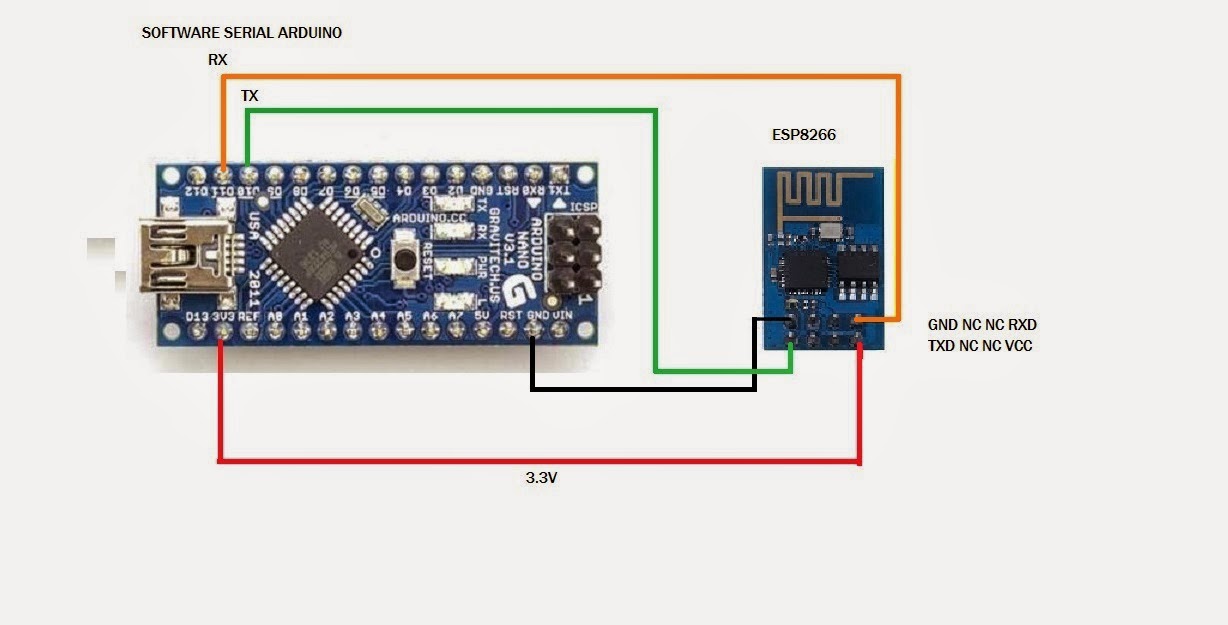
The ESP8266 is connected to the Arduino through TXD, RXD, GND, and the VCC pins to the RX, TX, GND and 3.3 V pins, respectively (If you are using an Arduino MEGA). The TX received from the Arduino should be connected to a voltage divider so that RXD of the ESP8266 receives a signal of 3.3 volts logic and not 5 volts. If the signal is received in 5 volts, the ESP8266 will malfunction. The voltage divider will be explained in the next step.
If you are using an Arduino Uno, then follow the steps:
This item:Psychology and Personal Growth (8th Edition) by Nelson Goud Paperback $134.99. With this newly revised, updated, and reorganized eighth edition, Nelson Goud and Abe Arkoff have made an outstanding personal growth and development text even better. Incorporating insightful. By Abe Arkoff and Nelson Goud. Book has minimal wear to cover and binding. Other Editions of Psychology and Personal Growth. Find 995 Psychology and Personal Growth 4th Edition by Arkoff et al at over 30 bookstores. Buy, rent or sell. Introducing psychology 4th edition pdf.
Arduino --------------------------------------------------- ESP8266
At Commands Esp8266
Pin 10 (Software RX) -----------------------------------> TXD
Pin 11 (Software TX) -------> Voltage Divider -----> RXD
GND --------------------------------------------------------> GND
3.3 V --------------------------------------------------------> VCC
3.3 V --------------------------------------------------------> CH_PD